Choosing reliable equipment can shape every stage of modern shoe production. This guide explores the 10 Best Shoe Making Machines for Global Buyers, from cutting systems to finishing equipment. Each machine serves a different production need. Some improve precision, while others reduce labor and material waste.
The selection considers practical factory conditions, not attractive specifications alone. Cutting accuracy, operating speed, energy use, maintenance access, and operator safety all matter. A machine may perform well in a demonstration yet struggle with thick leather, recycled materials, or humid workshops. That difference deserves attention.
Real purchasing decisions also include installation, training, spare parts, and after-sales support. Buyers should request sample testing before placing large orders. Ask suppliers about electrical standards, warranty coverage, production capacity, and documented quality controls. Small details can cause expensive delays. Not every “automatic” machine delivers the same level of automation.
This overview is based on common manufacturing experience and internationally relevant buying considerations. It does not treat one machine as perfect for every factory. Budget, product design, order volume, and local technical skills change the answer. Sometimes, a simpler machine proves more dependable. That can be easy to overlook.
The following selection helps global buyers compare performance, value, and long-term practicality. It also highlights limitations where available. Careful evaluation remains essential.
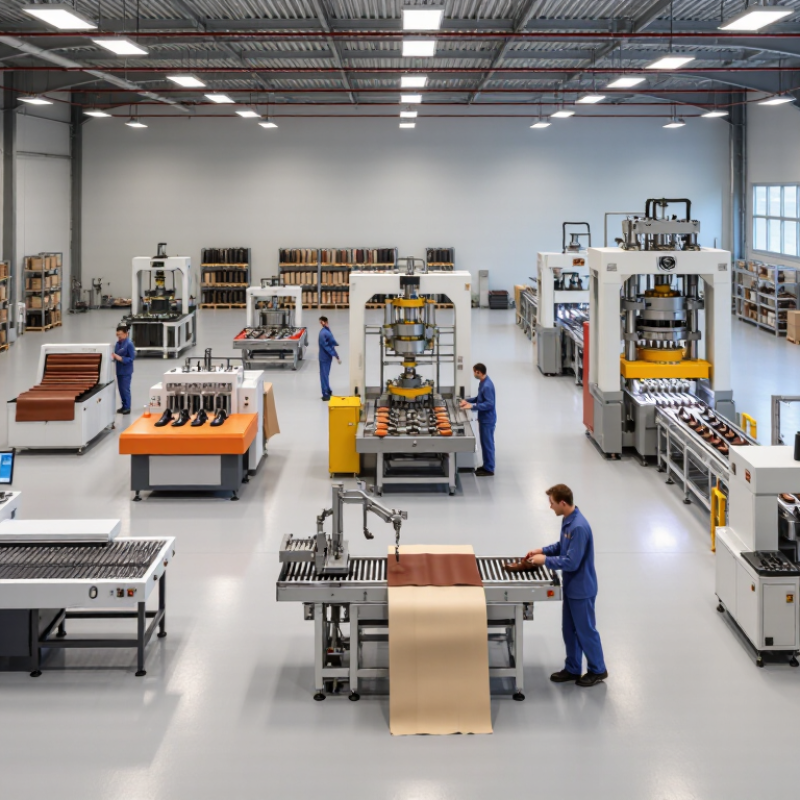
10 Best Shoe Making Machines for Global Buyers
What to Consider When Choosing a Shoe Making Machine
Choosing a shoe making machine starts with the product, not the advertised speed. A machine for sports shoes may not suit leather boots or lightweight sandals. Check the materials, thickness, and sole structure used in your real production line. Small samples can hide feeding problems. Run a longer trial with different sizes and difficult materials.
Production capacity matters, but consistency matters more. Ask for the machine’s practical output, not only its maximum cycle speed. Watch the first and last pieces of a test batch. Stitch spacing, cutting accuracy, bonding pressure, and alignment should remain stable. A few millimeters can affect comfort and appearance. Operators should adjust settings without complicated tools.
Power compatibility needs careful attention for global buyers. Confirm voltage, frequency, plug design, and compressed-air requirements before shipment. Examine guarding, emergency stops, noise levels, and cleaning access. A safer machine usually reduces training delays and maintenance risks. Spare parts availability is also important. Waiting weeks for a simple sensor can stop production.
Total cost deserves a wider calculation. Include installation, training, molds, electricity, maintenance, and replacement parts. An inexpensive machine may become costly after repeated adjustments. I would also request manuals, wiring diagrams, and a written service response time. These details are easy to overlook. They should not be. A careful buyer may still choose the simpler machine when local technicians cannot support advanced automation.
This chart compares typical rated output for common industrial shoe-making machine categories. Actual capacity varies according to shoe style, material, operator skill, automation level, and production workflow. Buyers should also evaluate accuracy, energy consumption, changeover time, maintenance requirements, and after-sales support.
Shoe making machines serve different stages, and each stage affects comfort, durability, and production speed.
The World Footwear Yearbook 2024 reported 23.9 billion pairs of footwear produced globally in 2023. Such volume demands reliable equipment, not simply faster equipment.
The best choice depends on material, batch size, labour skill, and maintenance access.
A 2024 industry analysis from Grand View Research places automation among the major forces shaping footwear manufacturing, but automation is not always economical for small workshops.
It can also expose weak training. A poorly adjusted lasting machine may distort the toe box within minutes. That detail is easy to miss.
Buyers should compare cycle time, energy use, changeover speed, safety features, and spare-parts availability.
Operators should test real materials before purchase. Factory data often looks cleaner than production floors.
Comparing the 10 best shoe making machines requires more than checking speed. The practical set includes cutting, skiving, stitching, lasting, sole attaching, pressing, molding, finishing, drying, and inspection equipment. Each machine solves a different production bottleneck. A cutting machine may improve material yield, while a stitching machine determines seam consistency. Lasting and sole attaching equipment usually influence shape accuracy and bonding stability.
The World Footwear Yearbook 2024 reports global footwear production reached about 23.9 billion pairs in 2023, with Asia producing roughly 88% of the total. This scale favors automated molding, pressing, and inspection systems. However, smaller factories may gain more from flexible cutting and stitching machines.
Energy use also matters. The International Energy Agency continues to identify motors and compressed-air systems as major industrial efficiency targets. Buyers should compare power consumption per pair, not only hourly output.
In factory trials, I would measure setup time, rejection rate, noise, and operator training needs. Less than five minutes matters. A machine producing 2,000 pairs daily can still lose value through frequent adjustments. The best comparison is rarely perfect because leather, mesh, rubber, and recycled materials behave differently. Some published performance figures look impressive, yet they may reflect ideal conditions. Buyers should request samples from their own materials and inspect ten consecutive pairs. That test may reveal uneven pressure, loose stitching, or weak adhesion.
The ten best shoe making machines depend on production volume, material, and product design. The World Footwear Yearbook 2024 recorded 23.9 billion pairs produced globally in 2023. Asia supplied 87.1% of that output. Buyers therefore need machines that match local capacity, not attractive specifications alone.
Computerized cutting systems suit frequent style changes and reduce material waste through nesting software. Die cutters remain practical for stable, high-volume patterns. Skiving machines need adjustable blade depth for leather thickness variations. Stitching units should offer programmable speed, reliable thread tension, and ergonomic controls. Small workshops may value flexibility more than maximum speed.
High-volume factories often require automatic lasting, sole pressing, and injection equipment. Pressure consistency matters. Uneven pressing can create visible gaps around the sole. According to World Robotics 2024, 541,302 industrial robots were installed worldwide during 2023. This growth supports automated handling, but shoe production still needs skilled adjustment. Automation is not magic. Poor calibration can multiply defects quickly.
Energy use, maintenance access, and operator training deserve equal attention. A machine with remote diagnostics may reduce downtime, while modular parts simplify repairs. Safety guards and emergency stops are essential purchasing criteria. Buyers should request sample trials using their actual materials. Catalog tests can mislead. A quieter machine may still perform poorly on thick uppers. The strongest evaluation combines output, defect rate, changeover time, and five-year operating cost.
Buying, Installing, and Maintaining Machines Worldwide
Buying a shoe-making machine requires more than comparing speed and price. Define the materials, daily output, product sizes, and production stages before contacting suppliers. A machine for leather uppers may not suit synthetic materials or heavy soles. Ask for sample testing with your own materials. This simple step can reveal feeding problems, uneven pressure, or excessive waste. Check the electrical requirements carefully. Voltage, frequency, plug type, air pressure, and floor space can differ between countries. Request manuals, training details, spare-parts lists, and service response times in writing.
Installation should begin before the machine arrives. Measure doorways, elevator capacity, ventilation, and foundation strength. Prepare stable power protection and clean compressed air where required. Keep the machine away from dust, moisture, and direct heat. A qualified technician should inspect alignment, safety guards, emergency stops, and lubrication points. I once underestimated operator training, and production slowed for several days. The machine was correct, but the setup was not.
Maintenance must fit the factory routine. Clean adhesive residue, thread dust, and leather particles after each shift. Inspect belts, needles, cutters, rollers, and electrical connections weekly. Record unusual noise, vibration, temperature, and rejected pieces. Small changes often appear before a major failure. Store critical spare parts in labeled, dry containers. Remote support can help, but clear photos and accurate maintenance records matter. Some machines need local adjustment after seasonal humidity changes. That detail is easy to miss.
| No. | Machine Type | Primary Shoe-Making Application | Suitable Materials | Typical Production Capacity | Typical Power Requirement | Approximate Footprint | Installation Requirements | Routine Maintenance | Best For |
|---|---|---|---|---|---|---|---|---|---|
| 1 | Computerized Cutting Machine | Cutting uppers, linings, insoles, and pattern components from digital or physical layouts. | Leather, synthetic leather, textile, mesh, felt, EVA sheets, and thin rubber. | Approximately 250–700 pairs per 8-hour shift, depending on material, nesting efficiency, and cutting area. | Approximately 5–12 kW; compressed air may be required for pneumatic components. | About 2.5–4.5 m long × 1.5–2.5 m wide. | Level floor, stable power supply, ventilation, and sufficient space for material loading and unloading. | Clean the cutting bed, inspect blades, remove material waste, lubricate moving parts, and calibrate the cutting head. | Medium to large factories |
| 2 | Leather Splitting Machine | Reducing leather thickness to create uniform uppers, linings, straps, and folded edges. | Natural leather, suede, and selected coated leather materials. | Approximately 300–900 hides or equivalent production lots per 8-hour shift, depending on hide size and thickness. | Approximately 4–10 kW; dust extraction is recommended. | About 1.5–2.5 m long × 1.0–1.6 m wide. | Rigid floor, accurate machine leveling, suitable lighting, and trained operators for blade adjustment. | Sharpen or replace the splitting blade, clean rollers, check thickness calibration, and remove leather dust daily. | Leather footwear production |
| 3 | Shoe Upper Sewing Machine | Joining upper panels, quarters, vamps, tongues, collars, and decorative components. | Leather, synthetic leather, canvas, mesh, microfiber, and laminated textiles. | Approximately 150–400 pairs per 8-hour shift, depending on stitch complexity and operator skill. | Approximately 0.4–1.5 kW per workstation. | About 1.2–1.8 m long × 0.6–0.9 m wide per workstation. | Stable worktable, suitable industrial sewing needles, thread management, task lighting, and operator training. | Clean lint and dust, oil designated points, check needle and thread tension, and inspect belts and presser feet. | Small workshops to factories |
| 4 | Toe Puffer and Toe Lasting Machine | Shaping the toe area and pulling upper material over the last before permanent attachment. | Leather, synthetic leather, textile uppers, thermoplastic toe-puff materials, and adhesives. | Approximately 250–600 pairs per 8-hour shift. | Approximately 3–8 kW; compressed air is commonly required at about 6–8 bar. | About 1.8–3.0 m long × 1.2–1.8 m wide. | Level floor, compressed-air system, correct last sizes, guarding, and operator access around the machine. | Inspect grippers and brushes, clean adhesive residue, check air lines, lubricate moving joints, and verify pressure settings. | Consistent toe shaping |
| 5 | Side and Seat Lasting Machine | Pulling and securing upper material around the sides and heel seat of the last. | Leather, synthetic leather, fabric uppers, rubber cement, and thermoplastic components. | Approximately 250–550 pairs per 8-hour shift. | Approximately 4–10 kW; compressed air is typically required. | About 2.0–3.2 m long × 1.3–2.0 m wide. | Level foundation, compressed air at approximately 6–8 bar, suitable guarding, and model-specific tooling. | Clean clamps and brushes, inspect grippers, check hydraulic or pneumatic pressure, and lubricate specified points. | Leather and sports footwear |
| 6 | Roughing and Cementing Machine | Preparing bonding surfaces and applying adhesive before sole attachment. | Leather, rubber, EVA, polyurethane, PVC, and thermoplastic rubber components. | Approximately 300–800 pairs per 8-hour shift. | Approximately 2–8 kW; dust extraction and ventilation are strongly recommended. | About 1.2–2.4 m long × 0.8–1.5 m wide. | Effective ventilation, dust collection, compatible adhesive storage, grounding, and fire-safety equipment. | Clean abrasive wheels and adhesive nozzles, replace filters, inspect guards, and remove accumulated dust and solvent residue. | Bonding preparation |
| 7 | Hydraulic Sole Press | Pressing soles onto lasted uppers to achieve consistent bonding pressure. | Rubber, EVA, PU, PVC, TPU soles, leather soles, and cemented footwear assemblies. | Approximately 250–700 pairs per 8-hour shift, depending on cycle time and number of stations. | Approximately 3–12 kW; hydraulic systems may require dedicated electrical protection. | About 1.5–3.5 m long × 1.2–2.2 m wide. | Level concrete floor, correct hydraulic oil, suitable molds or lasts, electrical protection, and safe loading access. | Check hydraulic oil level, inspect hoses and seals, clean pressing plates, verify pressure gauges, and tighten fasteners. | Cemented sole attachment |
| 8 | Direct Injection Molding Machine | Injecting polyurethane, PVC, or thermoplastic materials directly around the upper or into a sole mold. | Polyurethane, PVC, TPU, rubber compounds, and compatible textile or leather uppers. | Approximately 200–900 pairs per 8-hour shift, depending on the number of stations, cavities, and curing time. | Approximately 25–100 kW; cooling water and compressed air may be required. | About 3.5–8.0 m long × 2.5–5.0 m wide. | Industrial electrical supply, cooling-water system, ventilation, mold storage, stable floor, and trained maintenance personnel. | Clean injection nozzles, inspect heaters and thermocouples, check hydraulic systems, maintain molds, and monitor material moisture. | High-volume molded soles |
| 9 | Shoe Sole Stitching Machine | Stitching soles, welts, midsoles, or decorative seams to improve mechanical attachment and appearance. | Leather, rubber, EVA, cork, textile, and welted footwear components. | Approximately 120–350 pairs per 8-hour shift, depending on sole thickness and stitch pattern. | Approximately 0.8–3 kW per machine. | About 1.3–2.2 m long × 0.7–1.2 m wide. | Stable table or floor mounting, correct thread and needle selection, suitable guides, and adequate lighting. | Remove thread waste, oil the hook and moving parts, inspect needles and feed mechanisms, and adjust stitch tension. | Welted and stitched footwear |
| 10 | Finishing, Buffing, and Polishing Machine | Removing excess material, smoothing edges, polishing uppers, and improving the final appearance of footwear. | Leather, synthetic leather, rubber, EVA, polyurethane, PVC, waxes, and polishing compounds. | Approximately 300–1,000 pairs per 8-hour shift, depending on the number of finishing operations. | Approximately 2–15 kW; dust extraction is recommended for buffing operations. | About 1.0–2.5 m long × 0.7–1.5 m wide per workstation. | Good ventilation, dust collection, adequate lighting, guarded abrasive tools, and separated chemical storage. | Empty dust collectors, replace worn brushes and abrasive wheels, clean polishing units, inspect guards, and check drive belts. | Final quality and presentation |
Note: Capacity, power, footprint, and utility requirements are typical industry ranges. Actual specifications vary according to machine configuration, shoe style, material, mold or last design, automation level, and local electrical standards.
Common equipment includes cutters, skiving machines, stitching units, lasting machines, sole presses, molding systems, dryers, and inspection tools. Each machine handles a different bottleneck.
Compare output, defect rate, setup time, energy use, maintenance access, and training needs. Speed alone can mislead. Check five-year operating costs too.
Computerized cutting systems work well with changing patterns. Nesting software can reduce material waste. They are useful for leather, mesh, and recycled materials.
They can suit stable, high-volume patterns. Small workshops may prefer flexible cutting equipment. The right choice depends on product variety and daily output.
Test the machine with your own materials. Inspect ten consecutive pairs. Look for loose stitching, uneven pressure, feeding problems, weak bonding, and excess waste.
Measure doorways, elevator capacity, floor space, and foundation strength. Confirm voltage, frequency, plug type, air pressure, and ventilation requirements.
Clean adhesive residue, thread dust, and leather particles after every shift. Check belts, needles, cutters, rollers, and connections weekly. Record unusual noise and vibration.
No. Automation improves repeatability, but poor calibration can multiply defects quickly. Skilled workers still adjust pressure, alignment, materials, and machine settings.
Compare power consumption per pair, not only hourly output. Motors and compressed-air systems can consume significant energy. A fast machine may still cost more to operate.
Do not trust impressive catalog figures without testing. Ideal conditions may hide real problems. I once underestimated training needs, and production slowed for several days.
Choosing the right Shoe Making machine is essential for manufacturers seeking reliable quality, efficient production, and long-term value. This guide explains the main factors to evaluate, including production capacity, automation level, material compatibility, energy use, operating costs, safety features, and ease of maintenance. It also introduces major machine types, such as cutting, stitching, molding, lasting, pressing, and finishing equipment, while describing their roles in the overall manufacturing process.
The comparison of ten leading machine categories highlights how different solutions suit various production needs, from small workshops and flexible custom orders to high-volume factory operations. Readers will learn which features matter most for sports footwear, casual shoes, leather products, or specialized designs. The guide also covers practical considerations for purchasing, shipping, installation, staff training, spare parts, troubleshooting, and routine maintenance in international markets, helping buyers make informed decisions and build a stable, efficient, and scalable production system.
