
China Top Shoe Manufacturers: How to Make Shoes?
To understand how China’s top shoe manufacturers make shoes, we must look beyond low prices and large factories. Professional production begins with a clear design brief, accurate measurements, and a suitable shoe last. The last controls the final shape, fit, and comfort. It is not a minor tool.
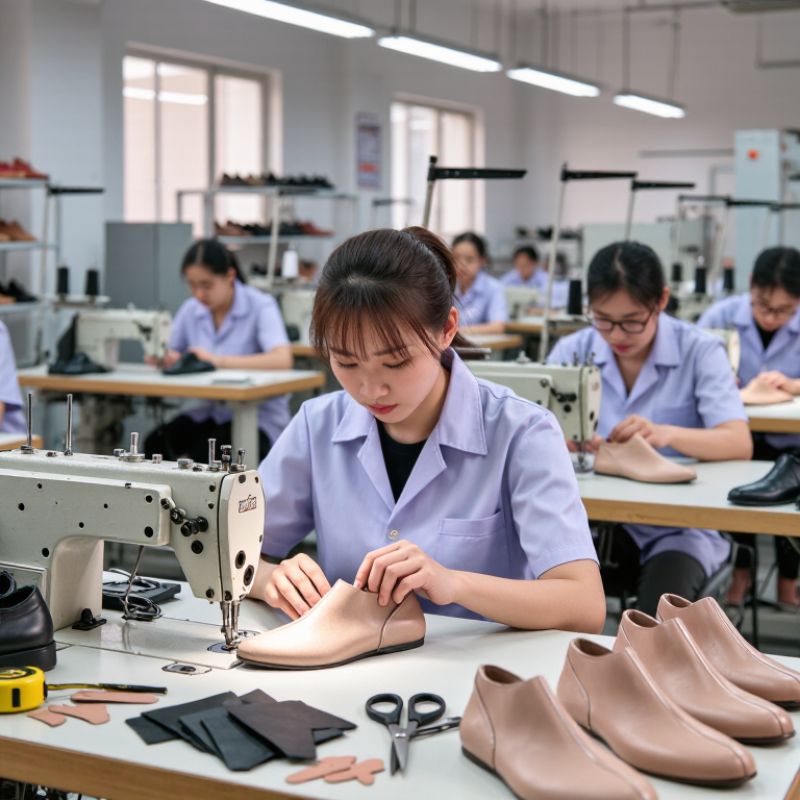
Stuart Weitzman, a respected American shoe designer, once said, “A shoe has to be three things: comfortable, beautiful, and make you feel good.” This simple statement reflects a demanding manufacturing reality. A reliable factory converts sketches into patterns, cuts leather or synthetic materials, stitches the upper, and bonds it to the outsole. Skilled workers inspect the toe box, heel counter, seams, and adhesive edges. Small errors become painful problems after long hours of wear.
Good manufacturers also develop samples before mass production. They test flexibility, size consistency, color stability, and outsole grip. Third-party inspections can check workmanship and packaging before shipment. Certifications, factory records, and transparent communication add practical trust. Yet no factory is perfect. A sample may look excellent but fail during repeated flexing. A lower price may hide weaker materials, rushed labor, or unstable quality.
Make Shoes successfully requires patience. Designers, material suppliers, technicians, and buyers must solve problems together. China offers mature supply chains, but location alone does not guarantee expertise. Buyers should compare samples, confirm specifications, visit facilities when possible, and document every revision. The most useful question is not simply who can make shoes cheaply. It is who can make the same shoes consistently, responsibly, and comfortably.
China’s 54.6% share of global footwear production in 2022 reflects a deeply connected manufacturing system. This scale is not created by factories alone. It depends on material suppliers, skilled pattern makers, mold workshops, testing laboratories, and organized logistics.
A typical shoe begins with a digital pattern and a physical sample. Technicians check the fit, toe shape, stitching position, and sole flexibility. Cutting machines then shape leather, textile, or synthetic materials. Workers assemble the upper before attaching the insole and outsole. Heat, pressure, and adhesive must remain consistent. Small changes can affect comfort and durability.
Small changes can affect comfort and durability.
Quality teams inspect stitching density, bonding strength, color accuracy, and size measurements. They may also test bending resistance and abrasion performance. Production records help trace materials and identify repeated defects. This practical discipline supports China’s large role in global footwear manufacturing.
However, the 54.6% figure should not suggest perfect efficiency. Some production lines still waste materials or depend too heavily on manual inspection. Factory performance can also vary between regions and suppliers. Better digital tracking, cleaner processes, and stronger worker training remain necessary. A polished sample may look convincing, yet daily production can reveal uneven seams or weak bonding. That gap deserves honest attention.
The last controls toe height, heel pitch, forefoot width, balance, and walking pressure. A comfortable desk sample may fail during a full work shift.
They build panels around the last and check seam tension carefully. A tight seam causes wrinkles. Loose allowances can distort the fit.
They should inspect lasting, adhesive coverage, stitching, heel alignment, and outsole bonding. A first sample is rarely perfect. Records matter.
Applicable standards may assess impact, compression, slipping, flexing, abrasion, and bond strength. Testing should match the product category and current edition.
No. A passing result cannot repair weak factory control. Batch inspections, traceable materials, calibrated equipment, and retained samples support reliable claims.
Digital nesting can reduce waste across leather, mesh, and synthetic rolls. Operators must still check stretch, thickness, grain direction, and edge distortion.
Needle heat, thread tension, and operator handling may create puckering. Automation helps, but it is not magic.
Inspect the first ten uppers from each new material lot. Connect cutting and stitching data. Review doubtful vision-system images manually.
Soft mesh may need slower machine settings to prevent alignment and stitching defects. Faster output looks attractive, but the trade-off deserves honest review.
Measure comfort during sampling, not only after shipment. Track defect rates weekly. Some teams still check too late.
China’s footwear industry plays a major role in the global market, producing approximately 54.6% of the world’s shoes in 2022. To Make Shoes successfully, manufacturers begin by selecting suitable materials, including leather, mesh, rubber, EVA, adhesives, and certified components. Each material must match the intended design, comfort requirements, durability goals, and applicable safety standards.
The production process continues with technical engineering, including the development of lasts, patterns, molds, and performance specifications based on ASTM or ISO requirements. Uppers are then cut, stitched, and assembled, with automation helping factories respond to a global market of around 22.4 billion pairs annually. Afterward, the shoes are lasted, bonded, cured, finished, and carefully inspected. Quality teams may apply AQL 2.5 sampling standards to identify defects and maintain consistent workmanship. Through coordinated material selection, precise production, and systematic quality control, manufacturers can create reliable footwear efficiently and at scale.
