Choosing the right Track Shoes in 2026 requires more than comparing prices or chasing famous logos. Global buyers face different surfaces, climates, competition rules, and athlete needs. A sprinter training on a dry synthetic track needs a different setup from a distance runner facing wet lanes and repeated sessions.
Dr. Ross Tucker, a respected sports scientist, offers a useful principle: “The best shoe is the one that matches the athlete, event, and surface.” That idea should guide every purchase. A lightweight sprint spike may provide aggressive traction, while a distance spike should balance grip, comfort, and fatigue control. Examine the plate stiffness, spike-pin system, upper security, toe-box shape, and heel support. Small details matter. A loose heel can ruin a race.
Real buying experience also exposes weaknesses. Product descriptions may promise speed, but they rarely explain durability across different tracks. Some models feel excellent for ten minutes and uncomfortable after an hour. This is where careful testing matters. Buyers should check sizing charts, material quality, replacement-pin availability, return policies, and current federation regulations before ordering.
This guide compares leading Track Shoes for international buyers in 2026. It considers event type, athlete level, surface conditions, construction, value, and long-term reliability. No ranking is perfect. Feet differ. Training habits differ. Even expert advice needs personal verification. The strongest choice is not always the lightest model, but the one that remains secure, responsive, and comfortable when competition pressure rises.
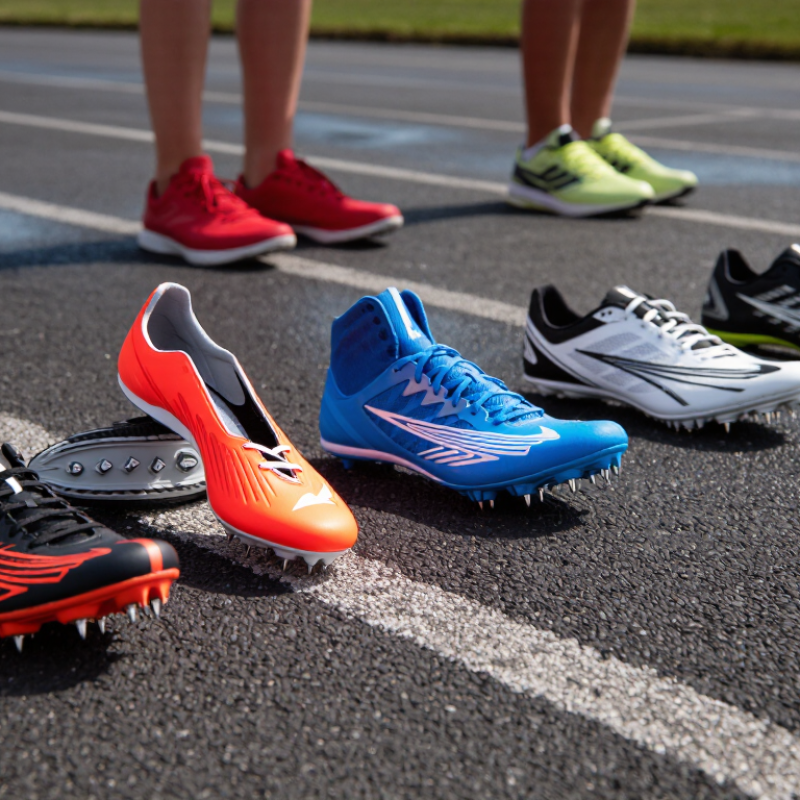
Track shoes are lightweight footwear designed for running on oval tracks, with versions for sprinting, middle-distance racing, jumping, and throwing. Many models use removable spikes for grip, while others use flat rubber soles for training. World Athletics competition rules regulate spike dimensions, sole construction, and event suitability. Buyers should check current local rules before ordering.
Who should use them in 2026? Competitive runners benefit most, especially when acceleration, cornering, and efficient ground contact matter. Beginners may need regular running shoes first. Track shoes can feel harsh on roads, concrete, and unprepared ankles. They are not everyday footwear. A short trial on a track is wiser than an online guess.
The global athletic footwear market reached an estimated USD 152.5 billion in 2023, according to Grand View Research. This growth reflects broad demand, but market size does not prove better performance. The World Health Organization reported that about 31% of adults worldwide were insufficiently active in 2022. For these users, comfort and gradual training matter more than aggressive spikes. Check foot width, heel stability, replacement spike availability, and return policies. Fit beats fashion, although this advice is not perfect for every foot. Some runners need professional gait assessment. Others simply need more patience.
Event demands should guide the purchase, not attractive materials or aggressive marketing. Sprint shoes need a firm forefoot, secure heel, and rigid plate for explosive acceleration. A lightweight upper reduces distraction during the first 60 meters. Yet excessive stiffness can punish weaker ankles. More speed is not always better.
Middle-distance runners need a careful compromise between propulsion and comfort. A moderately rigid plate, stable heel, and thin cushioning suit repeated changes of pace. Distance runners usually benefit from more foam, smoother transitions, and breathable mesh. Those features matter during the final laps, when feet swell and form becomes less precise. A 2023 review in Sports Medicine reported that footwear stiffness may improve running economy, but individual responses vary considerably.
Rules matter for global buyers. World Athletics’ Competition and Technical Rules limit track-shoe sole thickness to 20 millimeters for most track events. Spike length is generally limited to 9 millimeters, although some field events allow longer spikes. Buyers should confirm venue requirements before ordering. Indoor tracks may apply additional policies. Fit also needs testing with competition socks, because a half-size mistake can create heel movement or toe pressure. Product specifications are useful, but they cannot replace a short trial run. I would question any shoe promising universal performance.
Choosing track shoes starts with the surface, not the color. On synthetic tracks, short spikes can improve grip and reduce slipping during acceleration. World Athletics’ 2024 Competition and Technical Rules limit most track-event shoe soles to 20 millimetres. Buyers should confirm local competition rules before ordering.
Grass or compacted training surfaces need broader traction and more protection. Wet weather changes everything.
Distance matters just as much. Sprinters usually need a firm forefoot and aggressive traction for powerful starts. Middle-distance athletes often need a more balanced plate, because comfort becomes important after several laps. Long-distance runners may prefer lighter cushioning and less rigid support.
There is no perfect shoe. A shoe that feels fast for 100 metres can feel harsh after 5,000.
Athlete level also guides the decision. Beginners should prioritise fit, stability, and gradual adaptation. Experienced competitors can select stiffer designs after testing them in training.
The American College of Sports Medicine recommends increasing training load progressively, and that principle applies to spikes too. The 2024 Sports & Fitness Industry Association report recorded about 50.5 million U.S. running and jogging participants, showing how broad the market has become.
Still, participation data cannot replace a proper fitting. Measure both feet, leave slight toe space, and test the shoe before race day. That step is often missed.
Choosing the right track shoe type matters more than chasing the newest design. Sprint spikes suit short races, with stiff plates and aggressive traction for explosive starts. Middle-distance shoes balance speed, cushioning, and flexibility. Distance racing shoes usually feel lighter and smoother, helping athletes manage repeated impact over several laps. Field athletes need event-specific footwear. Jumping shoes support takeoffs, while throwing shoes emphasize rotation and stable contact.
Global buyers should match the shoe to the track surface, event, climate, and foot shape. A wet outdoor track can feel different from a dry indoor surface. Check sizing charts carefully, especially when converting between regional systems. Measure both feet late in the day. Leave a small space near the longest toe, but avoid heel movement. A narrow upper may cause pressure during long training sessions. There is no perfect pair. I still think many buyers focus too much on weight and ignore fit.
Tips: Ask a qualified coach or sports professional to review your event needs. Test the shoes gradually before competition. Examine the plate, stitching, and outsole after each session. Confirm local competition rules before purchasing aggressive spikes. For international orders, review return policies, import charges, and delivery times. Keep the original packaging until the fit feels reliable. Comfort is not weakness. It supports consistent training.
| Track Shoe Type | Typical Events | Spike Configuration | Main Performance Benefit | Comfort & Support | Best Buyer Profile | Important Buying Considerations |
|---|---|---|---|---|---|---|
| Sprint Spikes | 60 m, 100 m, 200 m, 4 × 100 m relay | Rigid forefoot plate; commonly 5–8 removable spikes, depending on the model and competition rules | Strong traction and efficient force transfer during acceleration and maximum-velocity running | Minimal cushioning; firm, aggressive feel with limited flexibility | Experienced sprinters who prioritize responsiveness and a secure fit | Not usually suitable for long-distance training; allow time to adapt to the stiff plate and forefoot loading |
| Long Sprint Spikes | 200 m, 400 m, 4 × 400 m relay | Moderately rigid plate with traction distributed for curve running and sustained speed | Balances speed, stability, and control over longer sprint distances | More forgiving than pure sprint spikes, with moderate forefoot cushioning in some designs | 400 m athletes and buyers seeking one specialized option for short and long sprints | Check heel lockdown, arch comfort, and stability on bends; fit should remain secure without excessive pressure |
| Middle-Distance Spikes | 800 m, 1,500 m, mile, some 3,000 m races | Moderate spike layout with a balance of grip, flexibility, and lightweight construction | Supports fast pace changes while reducing fatigue compared with highly rigid sprint designs | Moderate cushioning and a more natural transition through the foot | 800 m–1,500 m runners, developing athletes, and buyers wanting versatility | Choose based on the longest regular event; a very aggressive plate may be uncomfortable late in a race |
| Distance Spikes | 3,000 m, 5,000 m, 10,000 m | Flexible or moderately rigid plate with traction designed for economical running | Low weight and efficient grip while limiting discomfort over longer track events | Generally more cushioning and upper comfort than sprint spikes | Distance runners who value lightweight protection and stable foot placement | Prioritize toe-box comfort, blister prevention, and a secure heel; avoid using racing spikes for all daily mileage |
| Cross-Country Spikes | Grass, dirt, mud, and mixed-terrain cross-country races | Replaceable spikes, often with longer options for soft ground; exact allowable length depends on the governing body and venue | Improves grip on uneven or soft surfaces while maintaining a racing-oriented weight | More protective upper and outsole than track-only spikes; cushioning varies by design | Global buyers competing on natural surfaces or in regions with wet and variable course conditions | Select spike length for the course, not only the shoe; confirm local rules and consider water resistance for wet climates |
| Hurdle Spikes | 100 m hurdles, 110 m hurdles, 400 m hurdles | Traction-focused forefoot with a secure platform for repeated take-offs and landings | Combines acceleration grip with stability during hurdle clearance and sprint transitions | Usually more supportive than pure sprint spikes, particularly around the heel and midfoot | Hurdle specialists and multi-event athletes needing reliable control at take-off | Check ankle freedom, heel security, and forefoot flexibility; excessive stiffness can affect hurdle rhythm |
| Steeplechase Spikes | 3,000 m steeplechase | Distance-oriented traction system designed for track running and water-jump conditions | Provides grip and control across barriers, turns, and wet landings | Needs a secure upper and practical drainage; comfort is important over a long race | Specialized steeplechase competitors and buyers training or racing in wet conditions | Look for water management, stable heel hold, and rules-compliant spike dimensions |
| All-Round Track Spikes | School competition, mixed events, training, and occasional racing | Moderate traction and flexibility intended to cover several track disciplines | Practical versatility for buyers who do not specialize in one event | Typically more forgiving, supportive, and comfortable than highly specialized racing shoes | Beginners, youth athletes, school teams, and buyers seeking one pair for multiple events | Best value depends on durability, replaceable spike compatibility, fit range, and local availability |
| Spikeless Track Racing Shoes | Training, indoor facilities with restrictions, and selected track races | Rubber outsole or molded traction without removable metal spikes | Greater versatility and easier use across tracks, roads, and training surfaces | Usually the most comfortable and least demanding option for new users | Beginners, recreational runners, indoor users, and buyers facing facility restrictions | Traction can be lower than spikes on wet or fast track surfaces; confirm race regulations before purchase |
2026 Best Track Shoes for Global Buyers?
Global buyers should compare track shoes by event, foot shape, and training surface, not appearance alone. Measure both feet at day’s end, then leave roughly 8–10 millimeters before the longest toe. A secure heel matters. It should not lift during starts, yet the forefoot needs room to spread. Try them with competition socks and perform three short accelerations. That reveals pressure quickly.
Materials affect comfort, lifespan, and import risk. A woven upper can reduce weight, while reinforced panels may handle repeated bending better. Check the plate stiffness, spike compatibility, outsole rubber, and stitching around the toe box. Ask suppliers for material composition, sample photos, test records, and factory inspection details. I would not trust “premium” without measurable evidence. Some sellers provide impressive samples but inconsistent production.
Price comparisons need landed cost, not factory price. Add tooling, packaging, duties, inspection, payment fees, and transport. Request quotes under the same delivery terms and quantities. For shipping, confirm carton dimensions, gross weight, lead time, tracking, and replacement procedures for damaged pairs. Air freight may suit a small urgent order; sea freight usually lowers unit cost but demands patience. Build a buffer. Delays happen. A spreadsheet can expose savings that disappear after customs and returns. My own mistake was comparing unit prices before checking minimum order quantities. That made the cheapest option surprisingly expensive.
Comparison index based on commonly observed market characteristics: fit adaptability, material performance, price accessibility, and international shipping practicality. Higher scores indicate a stronger advantage for global buyers.
Scores use a 0–100 scale. Price and shipping scores favor lower total cost, while fit and materials scores favor broader usability, durability, breathability, and performance consistency.
Sprint shoes need a firm forefoot, secure heel, and rigid plate. A lightweight upper can reduce distraction during the first 60 meters. Too much stiffness can strain weaker ankles. Fast is not always better.
Choose a moderate plate, stable heel, and limited cushioning. The shoe should support pace changes without feeling harsh after several laps. Balance matters.
Distance shoes usually need more foam, smooth transitions, and breathable mesh. These features help when feet swell and running form becomes less precise. Comfort earns its place.
Synthetic tracks may suit shorter spikes for stronger acceleration and grip. Grass or compacted surfaces need broader traction and more protection. Wet conditions can change traction significantly.
Many track competitions limit shoe sole thickness to 20 millimeters. Spike length is often limited to 9 millimeters on standard tracks. Indoor venues may have extra restrictions. Rules vary.
Beginners should prioritize fit, stability, and gradual adaptation. Start with short training sessions before using the shoes in competition. Do not chase maximum stiffness immediately.
Measure both feet late in the day, when swelling is more likely. Leave slight space near the longest toe. The heel should not lift during acceleration. Test them with competition socks.
Check regional sizing, return terms, import charges, and delivery times. Keep the packaging until the fit feels reliable. Review the plate, stitching, and outsole after training. Specifications help, but they cannot replace a trial run.
In 2026, Track Shoes remain essential equipment for sprinters, middle-distance runners, jumpers, and athletes training on tracks. Their lightweight construction, specialized outsole, spike configuration, cushioning, and support should match the event rather than follow a one-size-fits-all approach. Sprint shoes prioritize stiffness and traction, while middle- and long-distance options require a more balanced combination of responsiveness, comfort, and control. Jumping events may need additional stability around the heel and midfoot.
Global buyers should compare Track Shoes according to running surface, event distance, training goals, and experience level. Beginners may benefit from moderate support and adaptable traction, while advanced athletes often prefer more precise, competition-focused designs. Fit should allow secure heel placement, comfortable toe movement, and enough room for natural foot expansion. Buyers should also assess upper materials, durability, weather suitability, total cost, sizing standards, delivery time, return policies, and import requirements. A careful comparison helps athletes select reliable footwear that matches performance needs and purchasing conditions.
